Introduction
In forex trading, it’s not just about entering at the right price it’s about managing position size to match the confidence level of the trade. Even the most accurate signal service won’t win 100% of the time, which is why lot size adjustment plays a huge role in long-term success.
This article will teach you how to adjust your lot sizes (aka position sizing) based on signal strength, trade setup quality, and risk tolerance without overexposing your account.
What Is Lot Size and Why It Matters
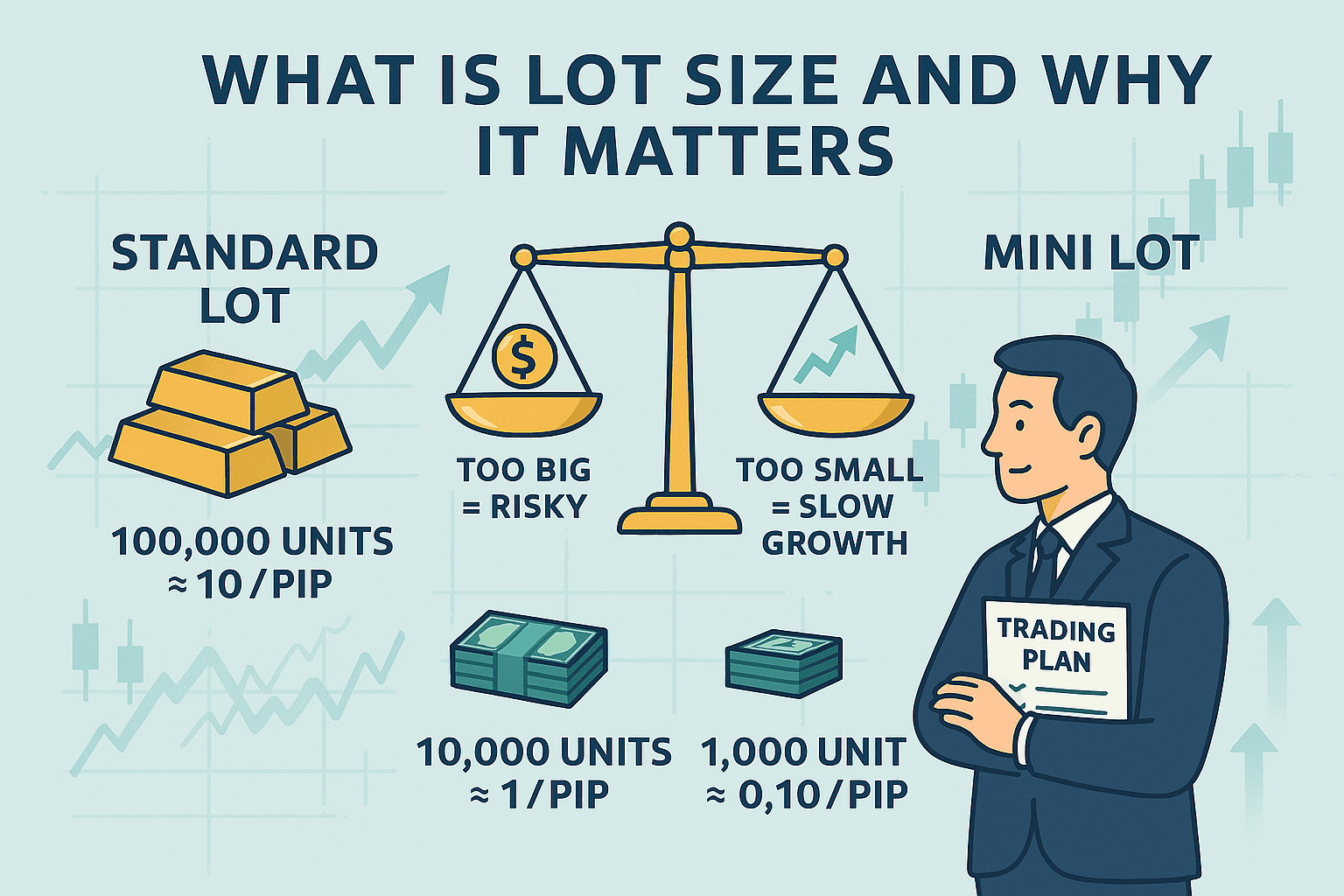
Lot size refers to the volume of a trade in forex. It directly affects how much profit or loss you make per pip.
- 1 Standard Lot = 100,000 units (approx. $10/pip)
- 1 Mini Lot = 10,000 units (approx. $1/pip)
- 1 Micro Lot = 1,000 units (approx. $0.10/pip)
If your lot size is too big, one loss can hurt your account. If it’s too small, even great signals won’t grow your capital meaningfully.
The goal? Balance your position size with how confident you are in the signal backed by data, not emotion.
What Is Signal Confidence?
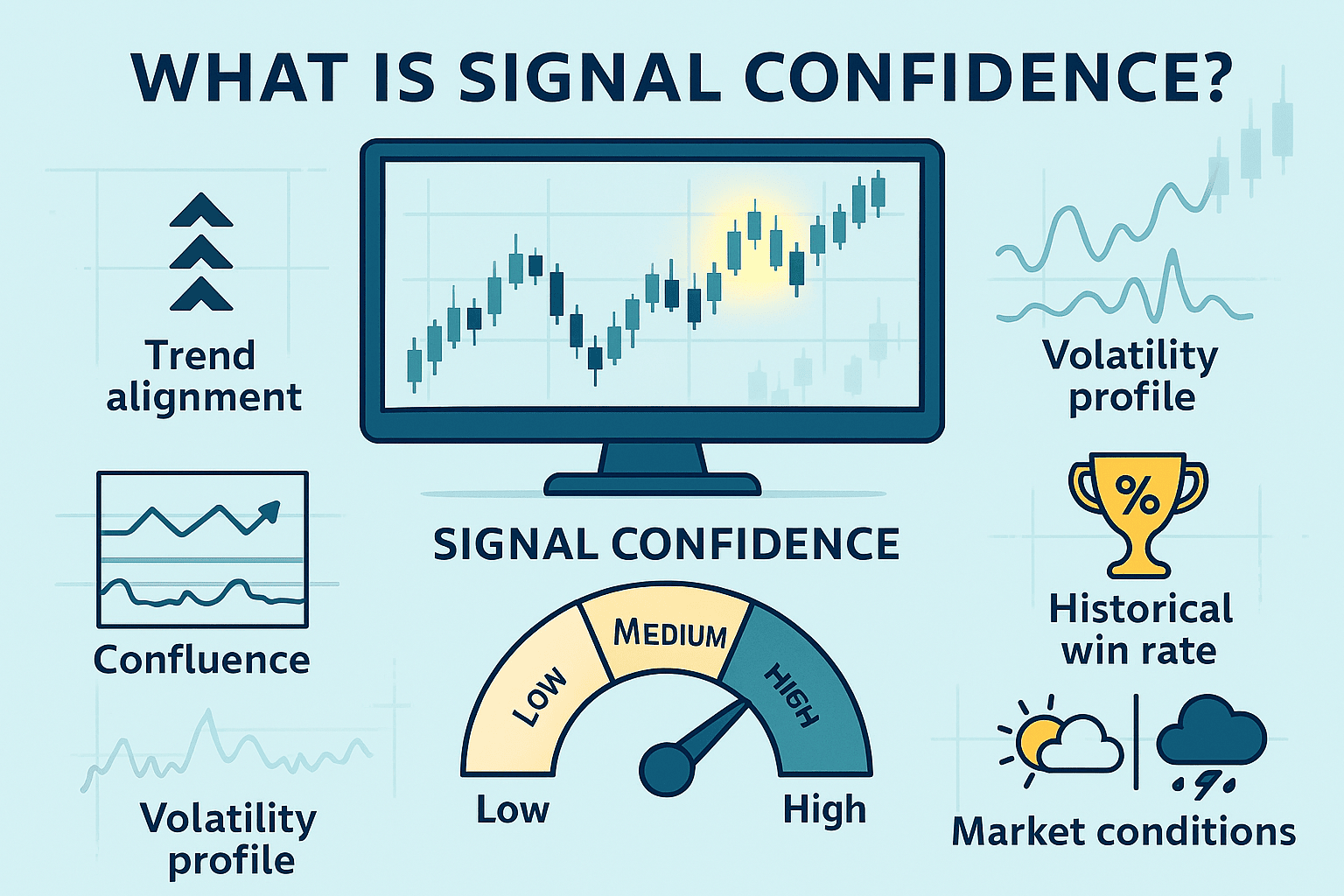
Signal confidence refers to how strong a signal is based on the factors that triggered it. At SignalsGrid, our algorithms assess signals using criteria like:
- Trend alignment across multiple timeframes
- Confluence of indicators (e.g., RSI + breakout + volume)
- Volatility profile (ATR, market reaction potential)
- Historical win rate of similar setups
- Market conditions (e.g., calm vs. news-driven)
Higher confidence doesn’t mean guaranteed profit it means higher statistical probability based on past data and current structure.
The Core Rule: Never Adjust Based on Emotion
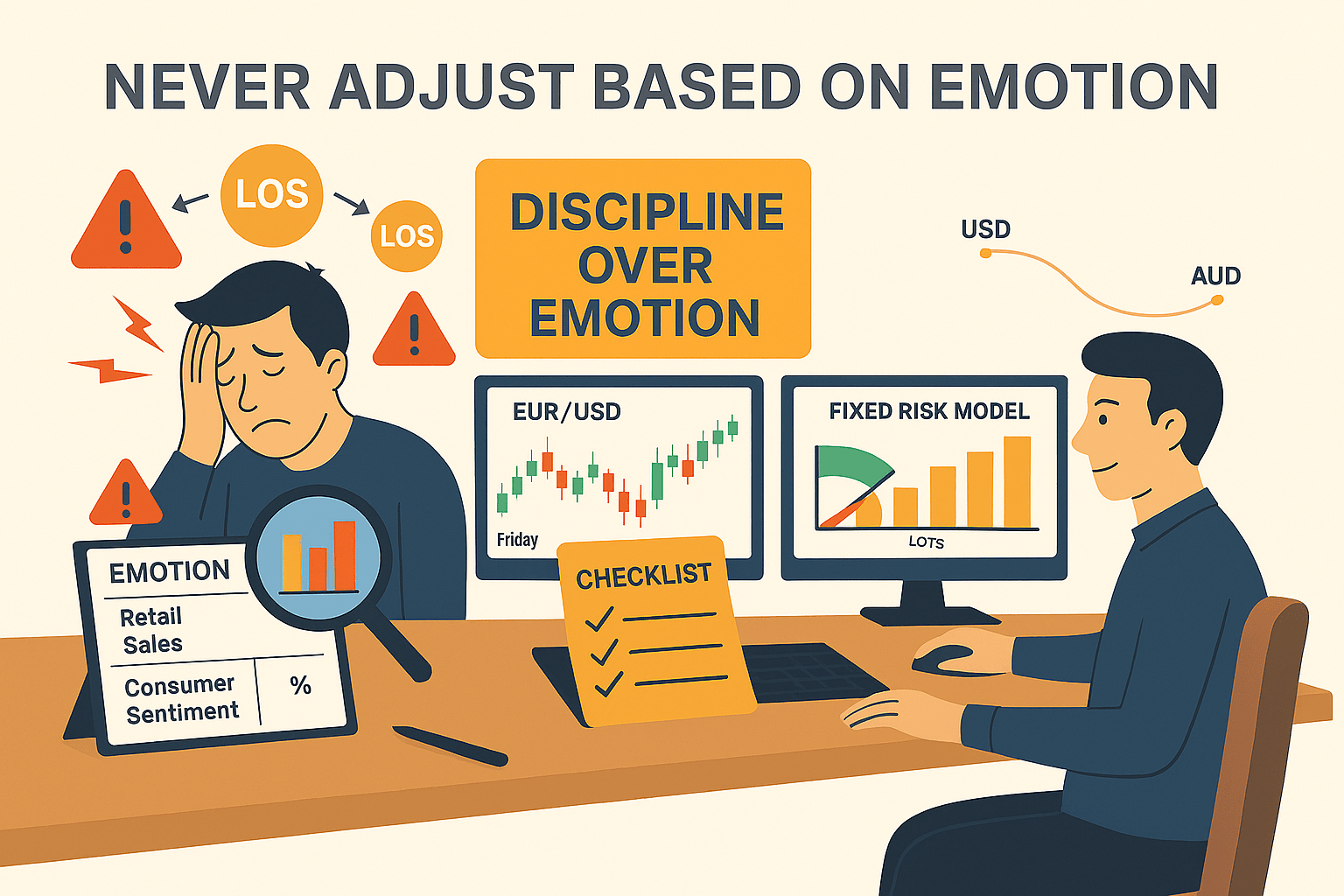
Many traders increase their lot size after a few wins or losses. This is emotional risk management and it’s dangerous.
Instead, use a structured approach to adjust lot sizes based on signal quality and your fixed risk model.
Step-by-Step: How to Adjust Lot Size Based on Signal Confidence
✅ Step 1: Define Your Risk Per Trade
Start with a fixed percentage risk. Most professionals recommend 1–2% of your account per trade.
Example:
If your account is $5,000 and you risk 2% per trade, your max loss = $100.
This $100 is your risk budget for each trade. You’ll adjust lot size, not risk, depending on stop-loss size and confidence level.
✅ Step 2: Categorize Signal Confidence Levels
At SignalsGrid, you’ll notice confidence indicators in our trade alerts (coming soon to our UI). Here’s a simplified scale you can use:
- 🔹 Standard Confidence – Typical setup, one or two confirmations
- 🔸 High Confidence – Strong technical alignment, solid volume
- 🔶 Very High Confidence – Rare setups with multi-timeframe confluence, high RRR
✅ Step 3: Adjust Lot Size Accordingly
Here’s how to scale your lot size while keeping the same risk %:
| Confidence Level | Suggested Lot Size Adjustment |
| Standard | Base lot size (e.g., 1.0 lot for $100 risk) |
| High Confidence | +25% (e.g., 1.25 lot for same $100 risk) |
| Very High Confidence | +50% (e.g., 1.5 lot for same $100 risk) |
Important: You’re not increasing the amount of money at risk you’re adjusting the lot size based on the stop-loss distance and trade confidence
Example: Realistic Signal-Based Adjustment
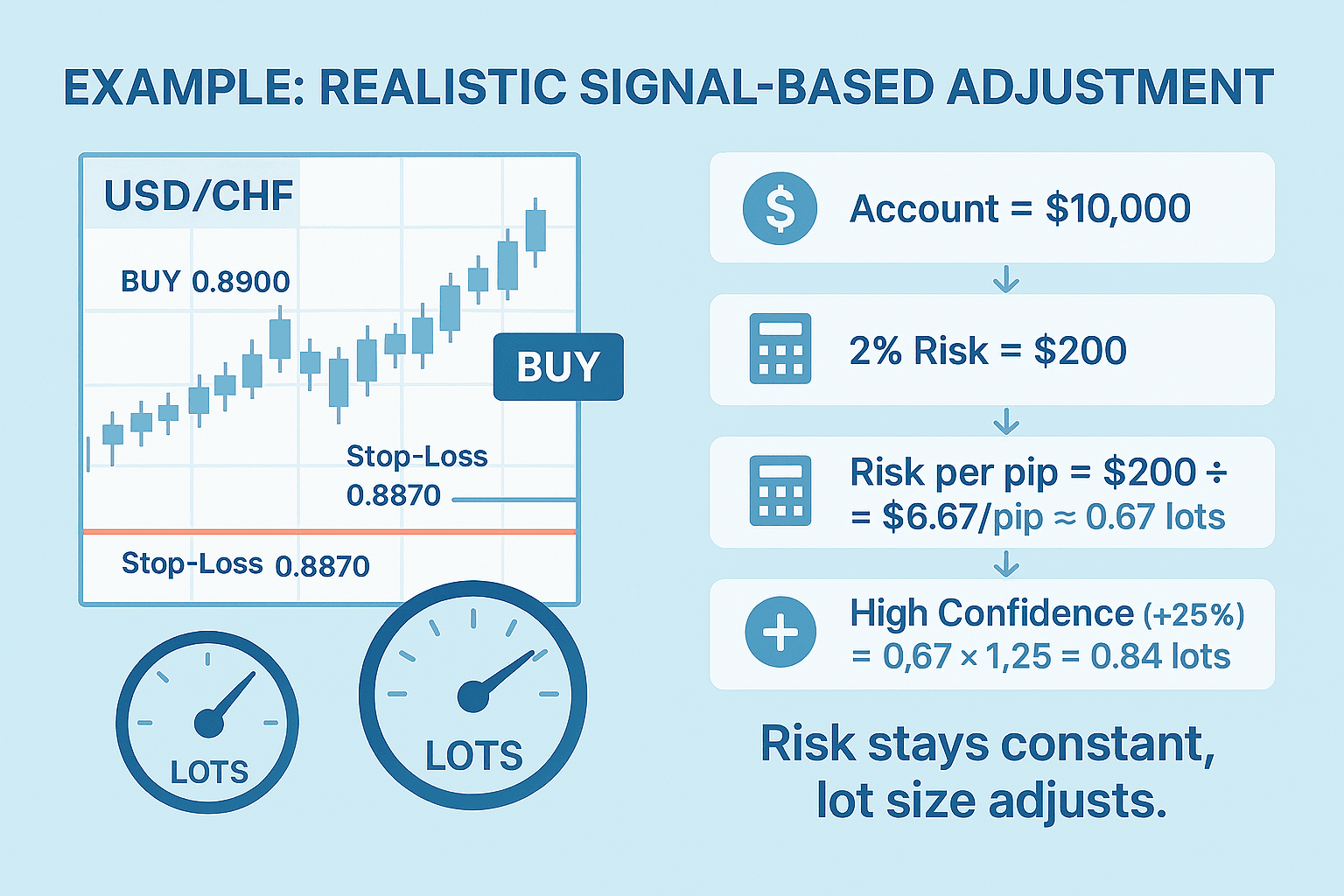
Let’s say you receive this signal:
Pair: USD/CHF
Action: BUY
Entry: 0.8900
Stop-Loss: 0.8870 (30 pips)
Confidence Level: High
Your account is $10,000, and you risk 2% ($200) per trade.
Risk per pip:
$200 / 30 pips = $6.67 per pip ≈ 0.67 lots
Since this is a high-confidence signal, you scale up lot size by +25%:
0.67 lots × 1.25 = 0.84 lots
That’s your adjusted lot size still risking the same $200, but maximizing opportunity based on confidence.
Why This Works Over Time
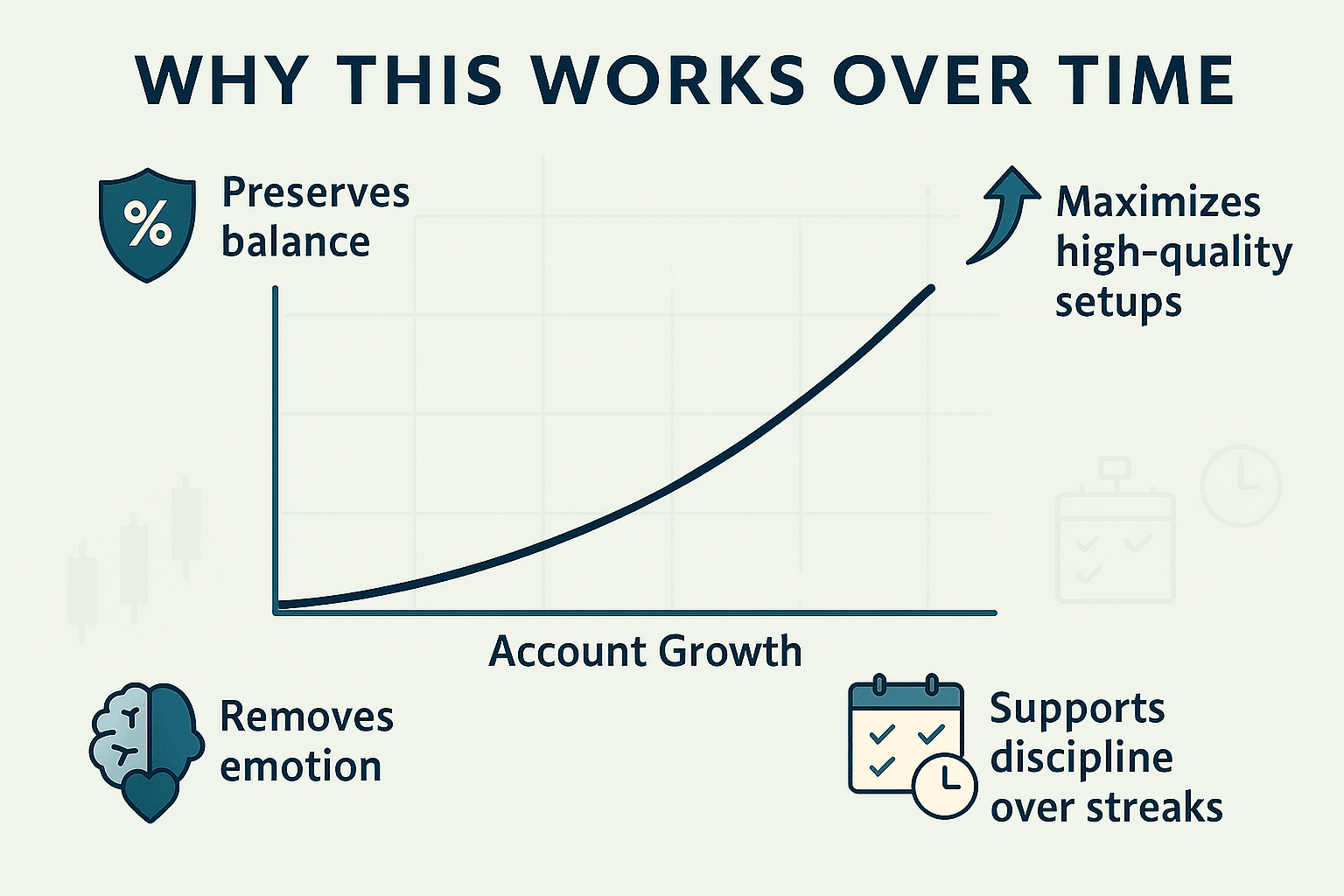
- Preserves account balance during uncertain signals
- Maximizes returns on high-quality setups
- Removes emotion from trade sizing
Helps you stay disciplined through winning and losing streaks
Bonus Tip: Use a Position Size Calculator
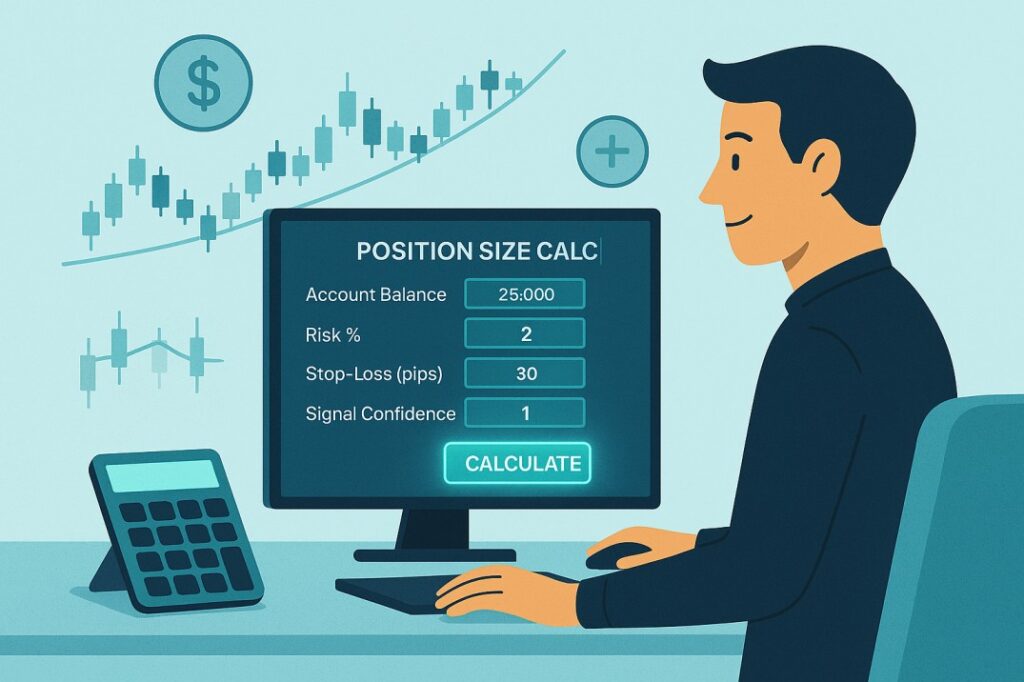
There are plenty of free tools online (or in your broker’s platform) to calculate lot size automatically. Just input:
- Account balance
- Risk %
- Stop-loss pips
- Signal confidence (for manual adjustment)
Final Thoughts

Adjusting your lot size based on signal confidence isn’t gambling it’s precision risk management. When used properly, it gives you the ability to lean into great opportunities without blowing up your account on weaker ones.
At SignalsGrid, every signal is built with this logic in mind. You don’t have to trade bigger you just have to trade smarter.