Introduction
Getting started with forex trading can feel overwhelming, especially when markets move fast and news impacts price action in real time. That’s where forex signals come in they offer clear trade recommendations, helping you trade smarter even if you’re new to the game. But signals aren’t magic bullets. To get the most out of them, you need to understand how to use forex signals effectively.
In this beginner’s guide, we’ll walk you through what forex signals are, how they work, and how to use them in a way that actually benefits your trading journey.
What Are Forex Signals?
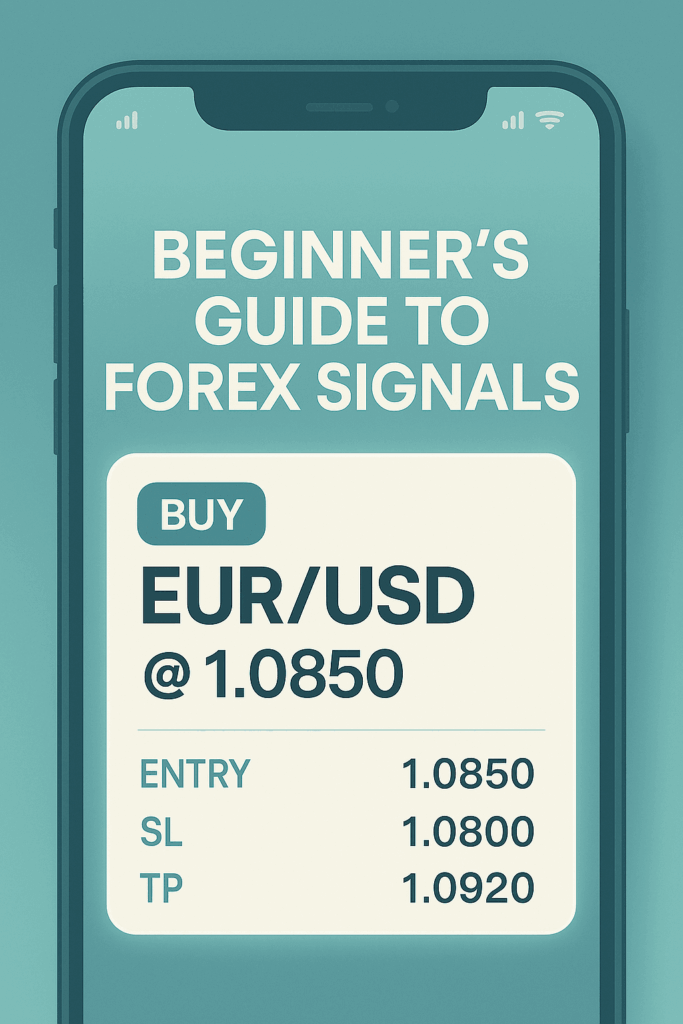
Forex signals are trade alerts sent by professional analysts or algorithmic systems. They tell you what pair to trade, in what direction, and at what price, including:
- Entry Point (e.g., Buy EUR/USD at 1.0850)
- Stop-Loss (the risk limit)
- Take-Profit (the target profit level)
- Optional Notes (e.g., based on RSI divergence or breakout confirmation)
Signals can be manual (from human analysts) or automated (via algorithmic systems like SignalsGrid).
Why Use Forex Signals?
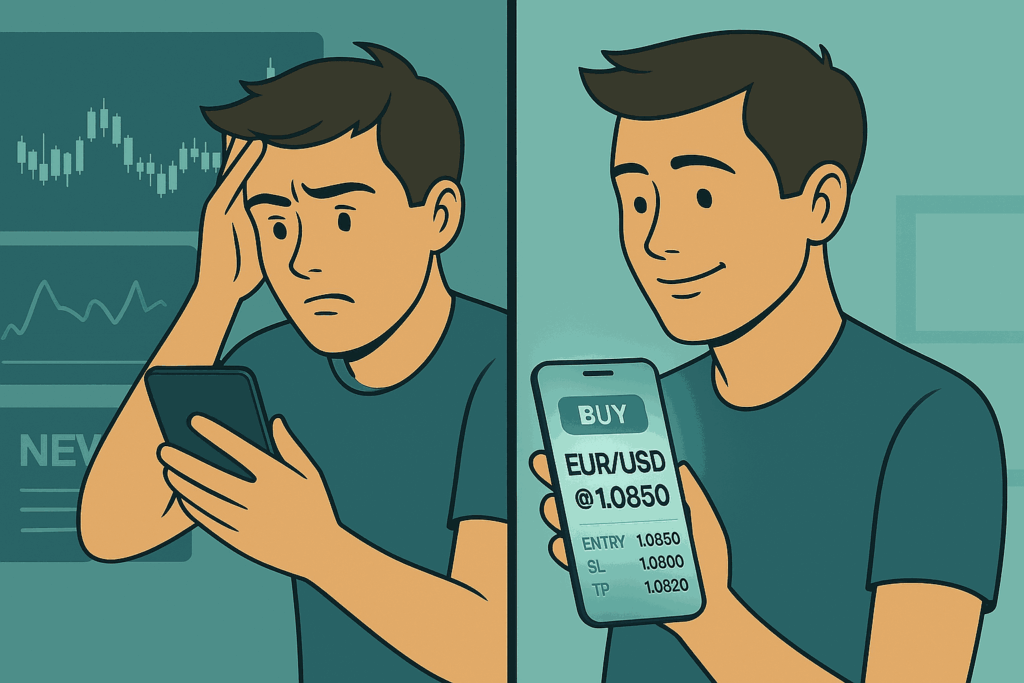
For beginners, signals are valuable because they:
- Help you avoid analysis paralysis
- Reduce emotional decision-making
- Teach you how professionals spot trade opportunities
- Offer risk-managed trade ideas
- Save time and simplify the process
But here’s the key: signals are a tool, not a replacement for thinking. The real benefit comes when you use them with discipline and understanding.
How to Read a Forex Signal (Basic Example)
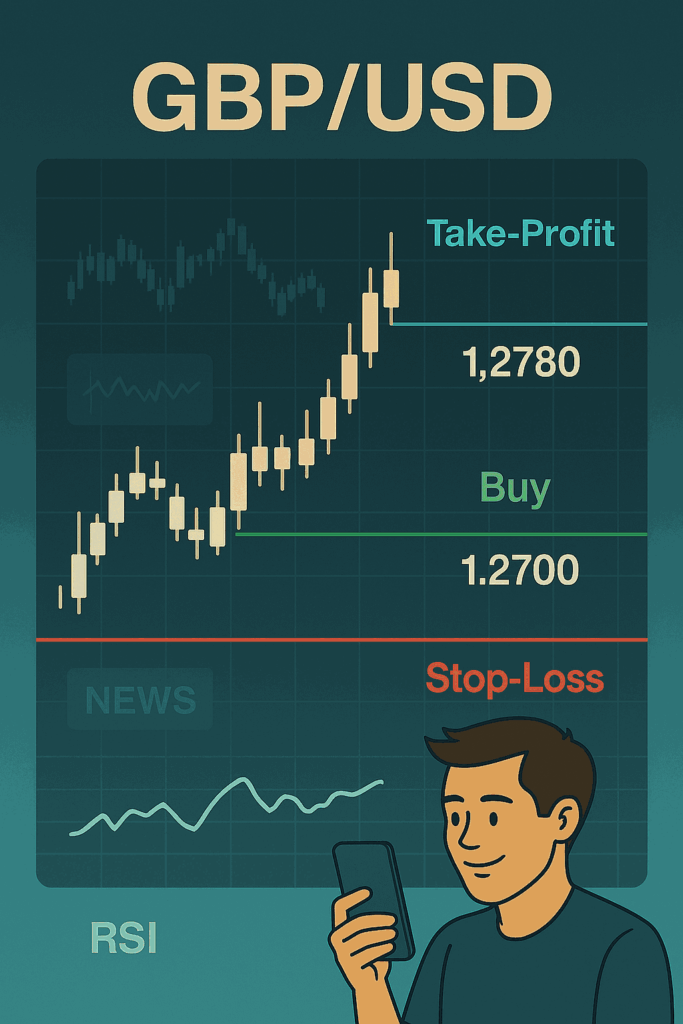
Let’s say you receive a signal that looks like this:
Pair: GBP/USD
Action: BUY
Entry: 1.2700
Stop-Loss: 1.2650
Take-Profit: 1.2780
Strategy Basis: RSI Reversal + Support Bounce
Here’s how to break it down:
- Buy GBP/USD: Expect the price to rise from 1.2700
- Stop at 1.2650: You’ll exit the trade if it drops too far
- Target at 1.2780: You’ll take profit if it reaches that level
- The strategy is based on RSI and support analysis
Tips to Use Forex Signals Effectively (Especially for Beginners)
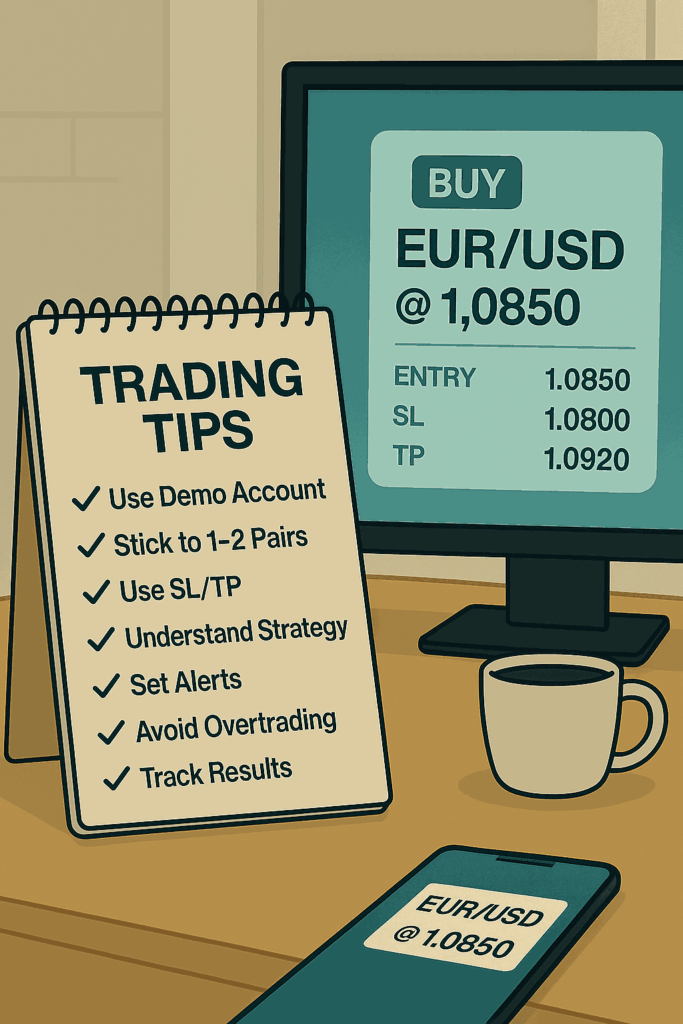
✅ 1. Use a Demo Account First
Before risking real money, test signals on a demo account. This helps you build confidence and learn how to execute trades.
✅ 2. Stick to One or Two Pairs
Don’t try to follow every signal across all pairs. Start with one or two (like EUR/USD or GBP/USD) and learn how they behave.
✅ 3. Follow the Whole Plan Not Just the Entry
Always use the recommended stop-loss and take-profit levels. Ignoring risk management is the fastest way to blow up your account.
✅ 4. Understand the Signal’s Logic
At SignalsGrid, we include a short strategy note (e.g., “Breakout Confirmed” or “Divergence Detected”). Try to learn from the signal that’s how you grow as a trader.
✅ 5. Set Alerts or Use Automation
Use your trading platform’s alert system or EAs (Expert Advisors) to help you enter trades on time. Timing is everything in forex.
✅ 6. Avoid Overtrading
Stick to the signals provided. Don’t jump into extra trades out of boredom or greed. Discipline pays off in the long run.
✅ 7. Track Your Results
Keep a simple journal of which signals you followed, what the outcome was, and how you felt during the trade. This is gold for building consistency.
Common Mistakes Beginners Make
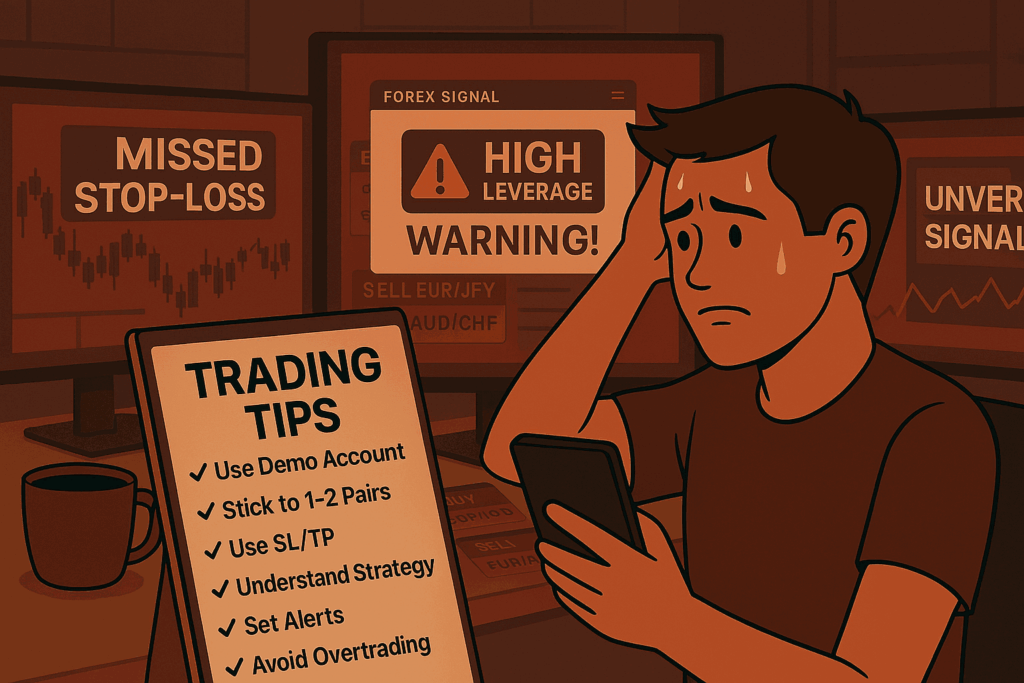
- ❌ Taking every signal blindly without understanding it
- ❌ Ignoring stop-loss to “wait and hope”
- ❌ Chasing signals from multiple providers and getting confused
- ❌ Trading with high leverage without a plan
- ❌ Overreacting to one loss and abandoning the system
The reality is even great signals will lose sometimes. The key is to follow a consistent plan and manage your risk properly.
Why SignalsGrid Is Ideal for Beginners
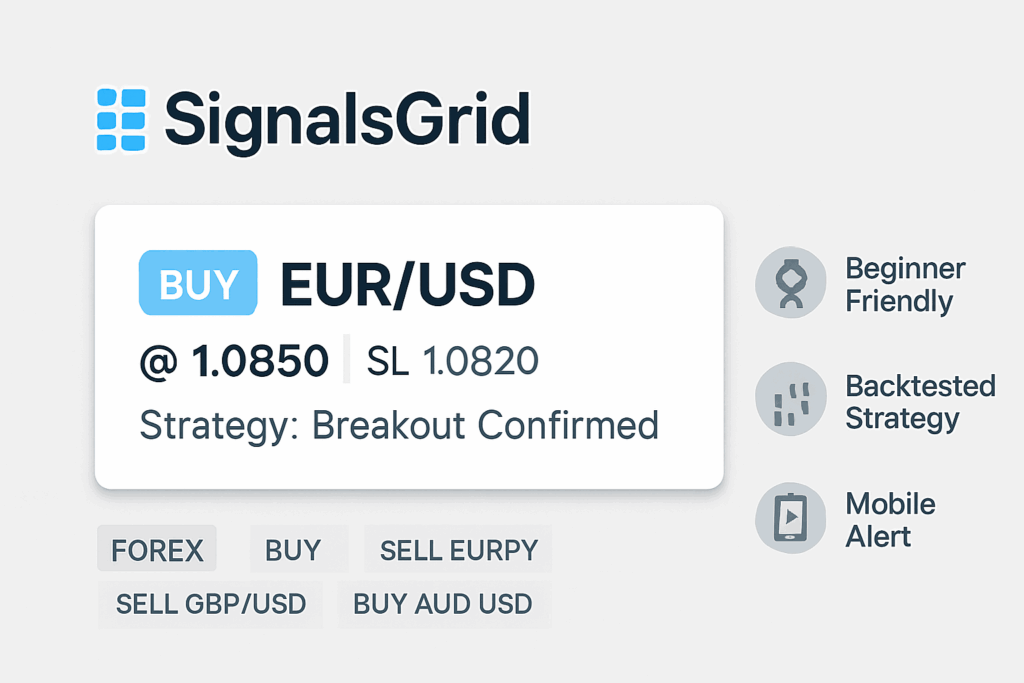
At SignalsGrid, we’re focused on clarity and simplicity. Each signal is designed to be:
- Easy to understand
- Backed by a clear strategy (trend-following, RSI, breakout, etc.)
- Risk-managed with tested stop-loss and reward ratios
- Sent in real-time across multiple platforms (web, mobile, email)
Plus, as a beginner, you can learn while you earn by reading the strategy notes included with each trade idea.
Final Thoughts
Forex signals can be your shortcut to trading with more confidence, but they work best when paired with understanding and discipline. If you’re new to trading, this guide should be your blueprint for using signals to learn, grow, and avoid common pitfalls.
Start small, stay consistent, and let SignalsGrid do the heavy lifting while you focus on becoming a smarter trader one signal at a time.