
Introduction
One of the biggest traps new forex traders fall into even when using reliable signals is overtrading. It’s easy to get caught up in the excitement of multiple signals, thinking more trades equal more profit. But in reality, more doesn’t always mean better. In fact, overtrading is one of the fastest ways to burn your account even when following good signal services.
This article will help you understand what overtrading is, why it’s dangerous, and most importantly how to follow forex signals the right way without falling into the overtrading trap.
What Is Overtrading?
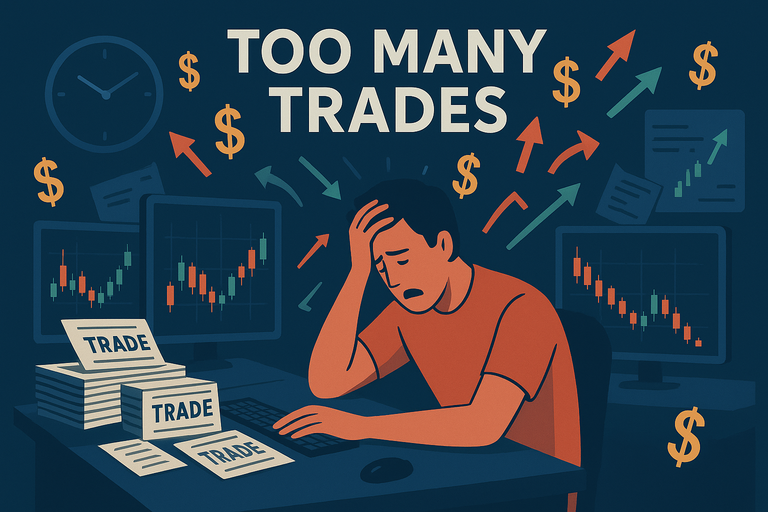
Overtrading means executing more trades than your strategy or account size can handle often out of impatience, greed, boredom, or emotional reactions.
This usually happens when traders:
- Take every signal without filtering
- Jump into extra trades beyond the signal system
- Chase missed trades impulsively
- Increase position sizes recklessly to “make up” for losses
Even if your signals are solid, overtrading can wipe out your gains due to slippage, fatigue, increased risk, and emotional breakdowns.
Signs You’re Overtrading (Even with Signals)
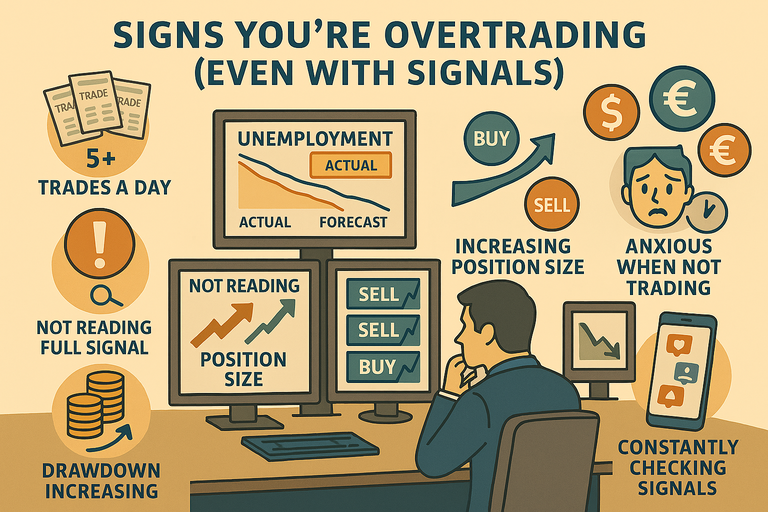
- You’re opening 5+ trades a day with no clear reason
- You’re jumping into trades without reading the full signal
- You increase your position size without adjusting stop-loss
- You feel anxious when not in a trade
- Your drawdown keeps increasing despite a decent win rate
- You’re constantly checking for “the next signal” like it’s social media
Sound familiar? You’re not alone but the solution is simple once you become aware of it.
How to Follow Signals Without Overtrading
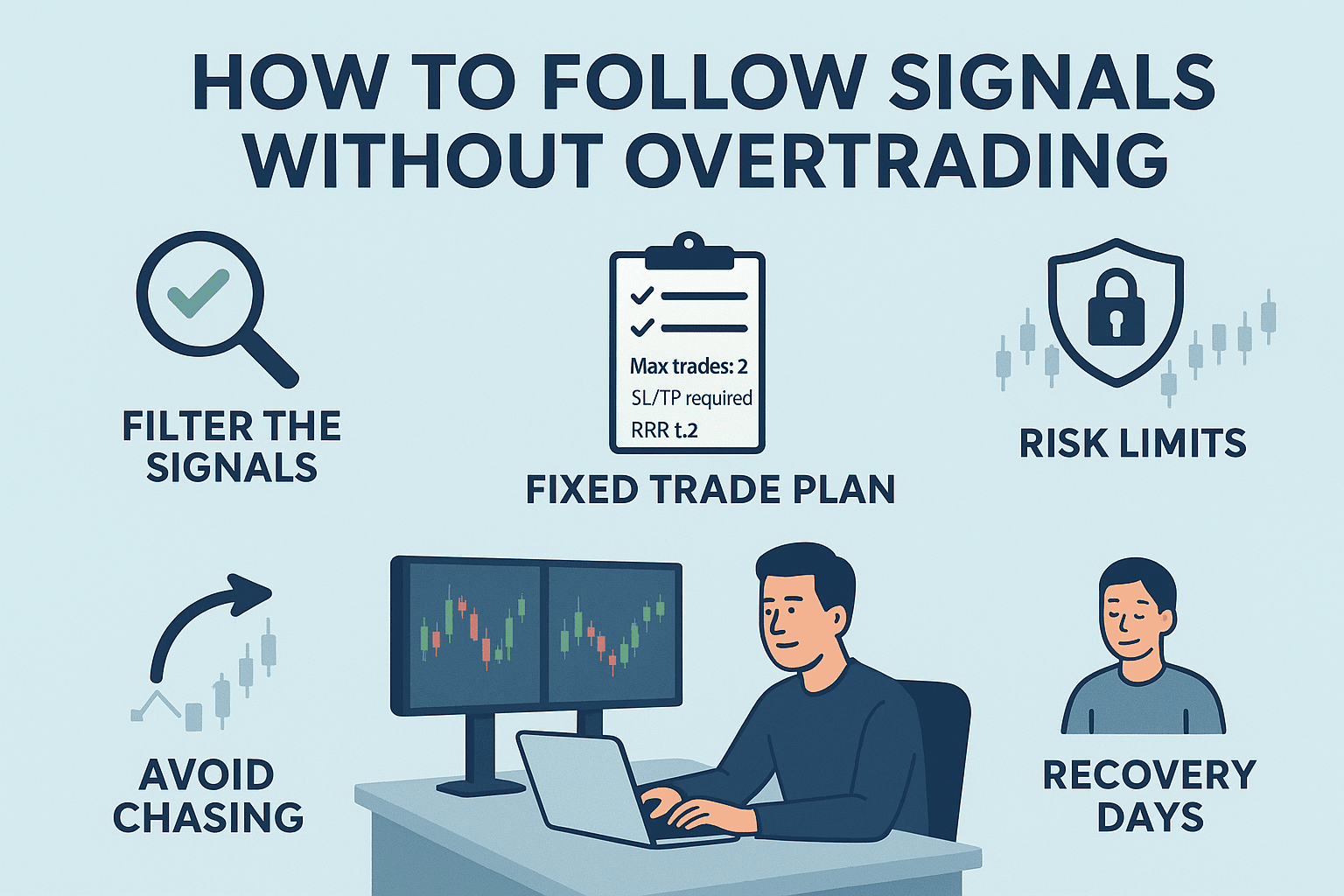
✅ 1. Filter the Signals You Follow
Even a premium service like SignalsGrid can issue multiple quality signals per week but that doesn’t mean you should follow them all. Pick:
- 1 or 2 currency pairs that suit your style
- Setups that match your comfort level (e.g., trend vs. reversal)
- Signals during your preferred trading session (e.g., London or NY)
Less is more. One or two solid trades per week can outperform ten rushed ones.
✅ 2. Use a Fixed Trade Plan
Create a simple plan like this:
- Max trades per day: 2
- Only trade if signal includes SL/TP
- Minimum RRR: 1:2
- No trading during high-impact news (unless signal accounts for it)
Sticking to a plan removes emotion from your decisions.
✅ 3. Use Risk-Per-Trade Limits
Don’t risk 5% on one trade and 10% on another. Use a consistent approach:
- Most pros recommend risking 1% to 2% of your account per trade.
- Use position size calculators to keep it precise.
If a signal doesn’t fit within your risk model it’s a no-go, no matter how tempting it looks.
✅ 4. Avoid Chasing Missed Signals
One of the most common causes of overtrading is FOMO fear of missing out.
Missed a trade? Let it go. Don’t try to “enter late” or double your position on the next one. Stay focused on quality, not quantity.
✅ 5. Build in Recovery Days
Not every day needs to be a trading day. Build in rest periods to avoid mental burnout and emotional decision-making. Markets aren’t going anywhere neither are high-quality signals.
Why This Matters (Even with Great Signals)
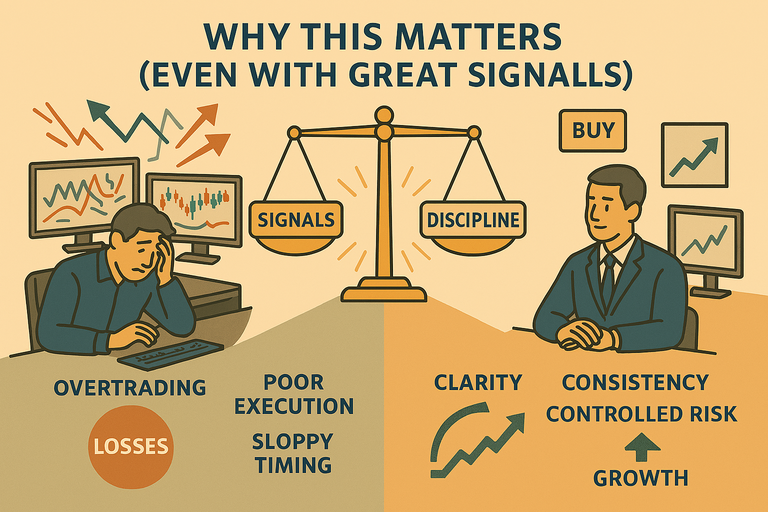
At SignalsGrid, our signals are built for clarity, consistency, and risk-managed performance. But if you overtrade even on good signals you’ll:
- Dilute your account with poor execution
- Ruin otherwise good trades with sloppy timing
- Miss out on the long-term compounding effect of controlled risk
Signals are only as good as how you use them.
Final Thoughts
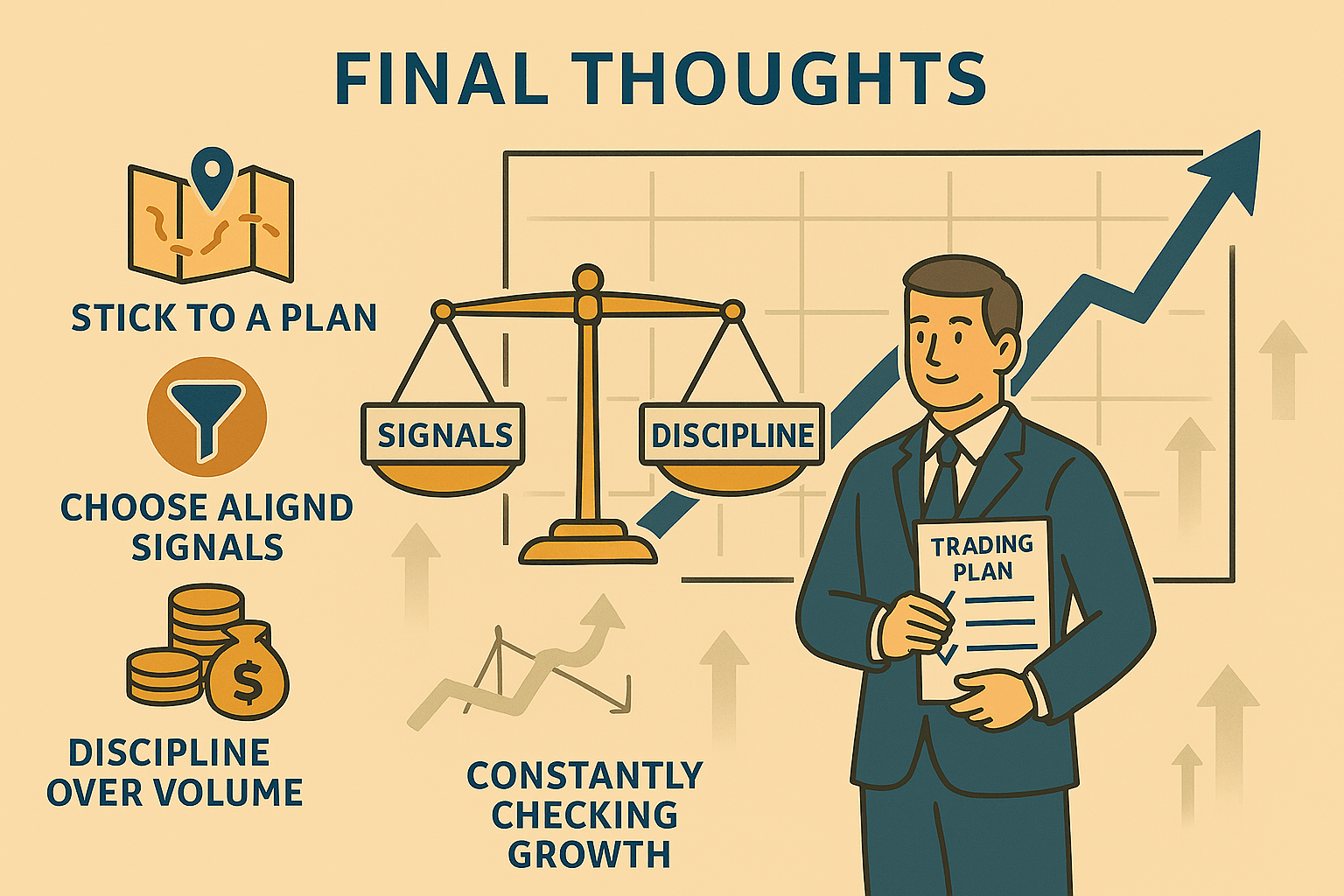
Following forex signals should make trading simpler not more stressful. But if you start jumping on every trade, ignoring risk, or chasing profits, you’ll end up sabotaging the very system designed to help you.
Stick to a plan. Choose only the signals that align with your strategy. Focus on discipline over volume. That’s how traders grow and how you win with SignalsGrid.