Introduction
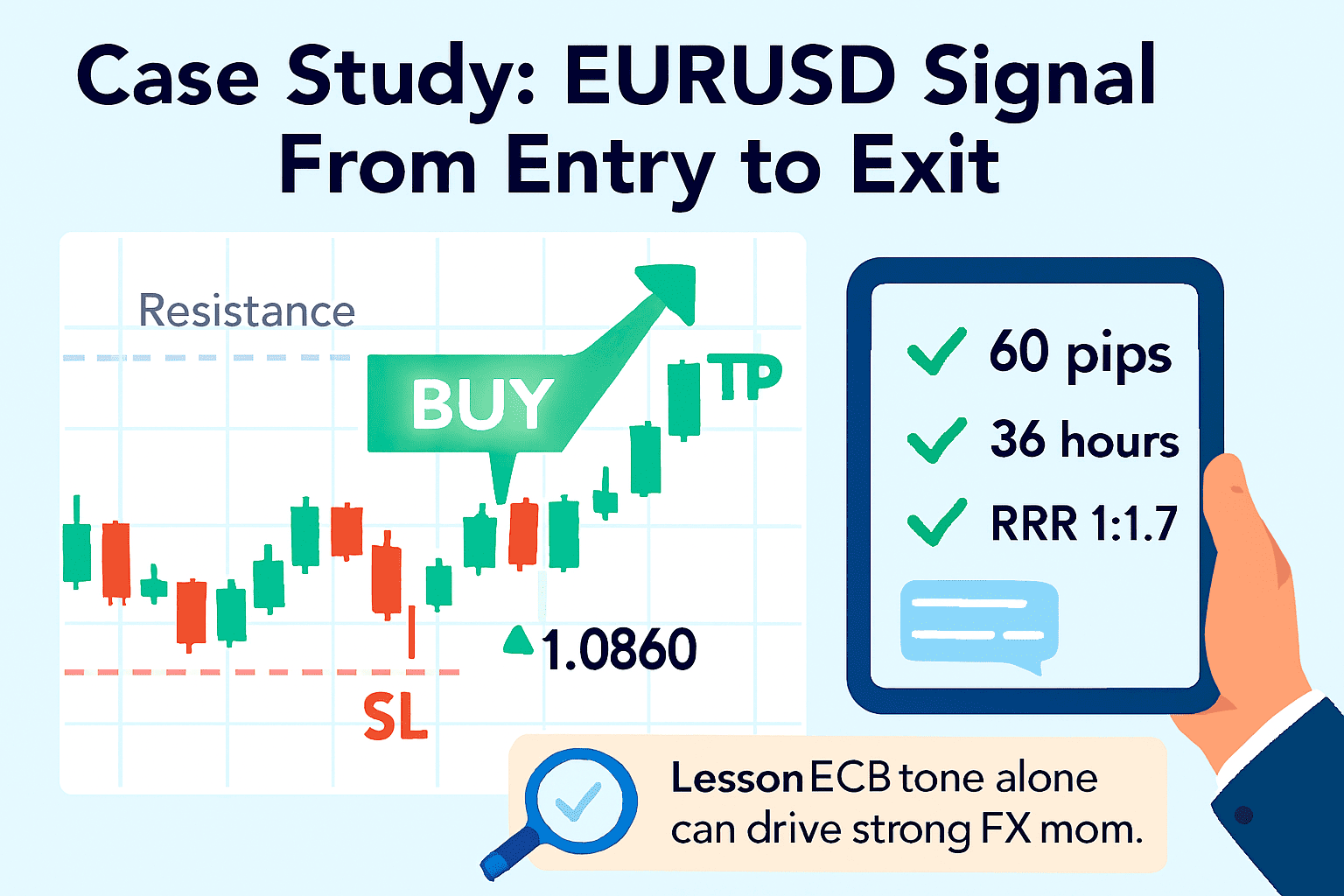
One of the best ways to learn how to use forex signals effectively is by reviewing real-world examples from setup to execution to result. In this SignalsGrid case study, we break down a recent EUR/USD trade signal that played out beautifully over a 36-hour period. You’ll see how it was generated, why it was high-confidence, and how it delivered a textbook move from entry to exit.
Let’s dive into the full trade journey.
Step 1: Pre-Signal Market Conditions
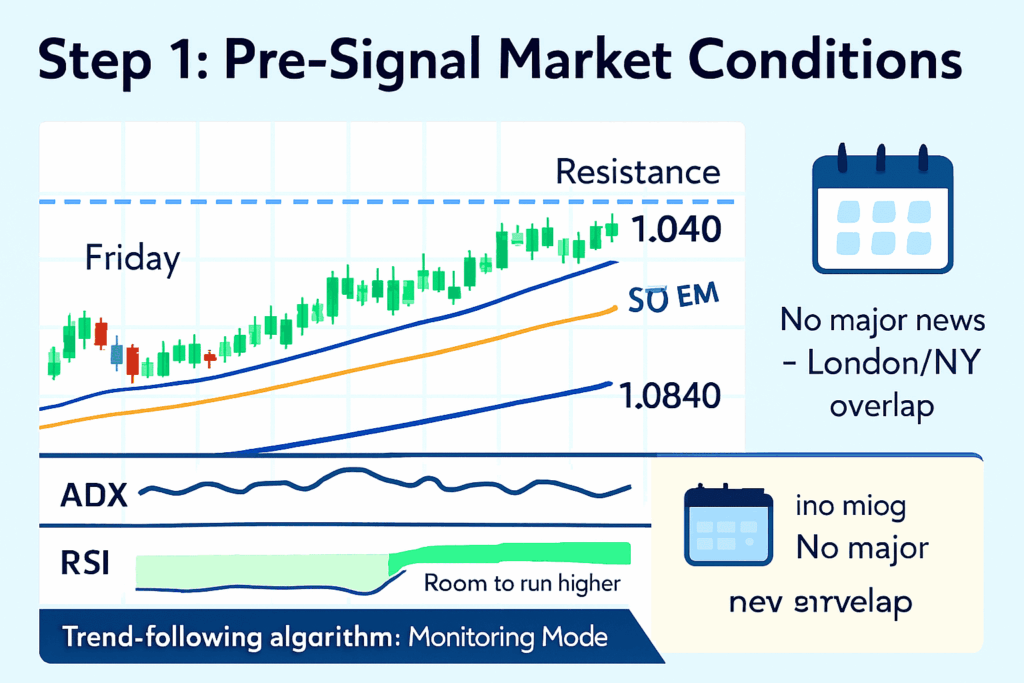
In the early hours of Tuesday, EUR/USD was trading in a bullish trend, steadily forming higher lows since the previous Friday. Price was hovering around 1.0840, consolidating below a key resistance zone at 1.0855.
Technical snapshot:
- Price above the 50 and 200 EMAs (bullish alignment)
- ADX reading above 25 (showing trend strength)
- RSI around 56 (room to run higher)
- No high-impact news scheduled during the London/NY overlap
This setup caught the attention of our trend-following algorithm, and it moved into monitoring mode.
Step 2: Signal Issued
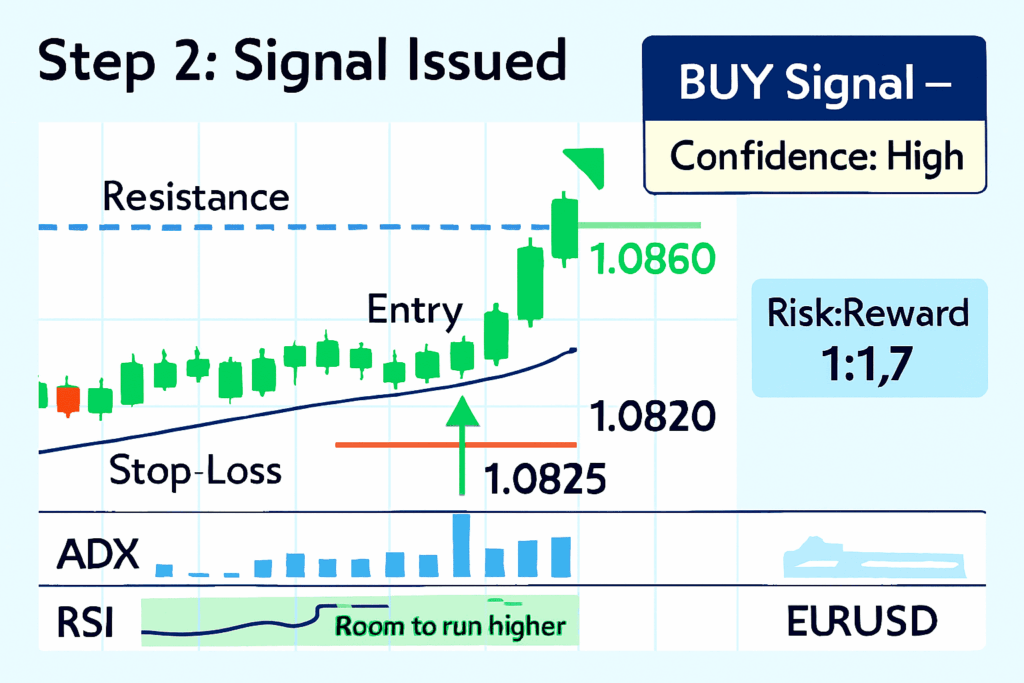
On Tuesday at 11:45 AM GMT, the price broke above 1.0855 with a clean bullish candle close, supported by a volume spike. That triggered the confirmation threshold for a BUY signal.
Signal Parameters:
- Pair: EUR/USD
- Direction: BUY
- Entry: 1.0860
- Stop-Loss: 1.0825
- Take-Profit: 1.0920
- Signal Confidence: 🔸 High
- Strategy Basis: Trend continuation + volume breakout
The trade offered a 1:1.7 risk-reward ratio a balanced setup with solid reward potential.
Step 3: Trade Management and Execution
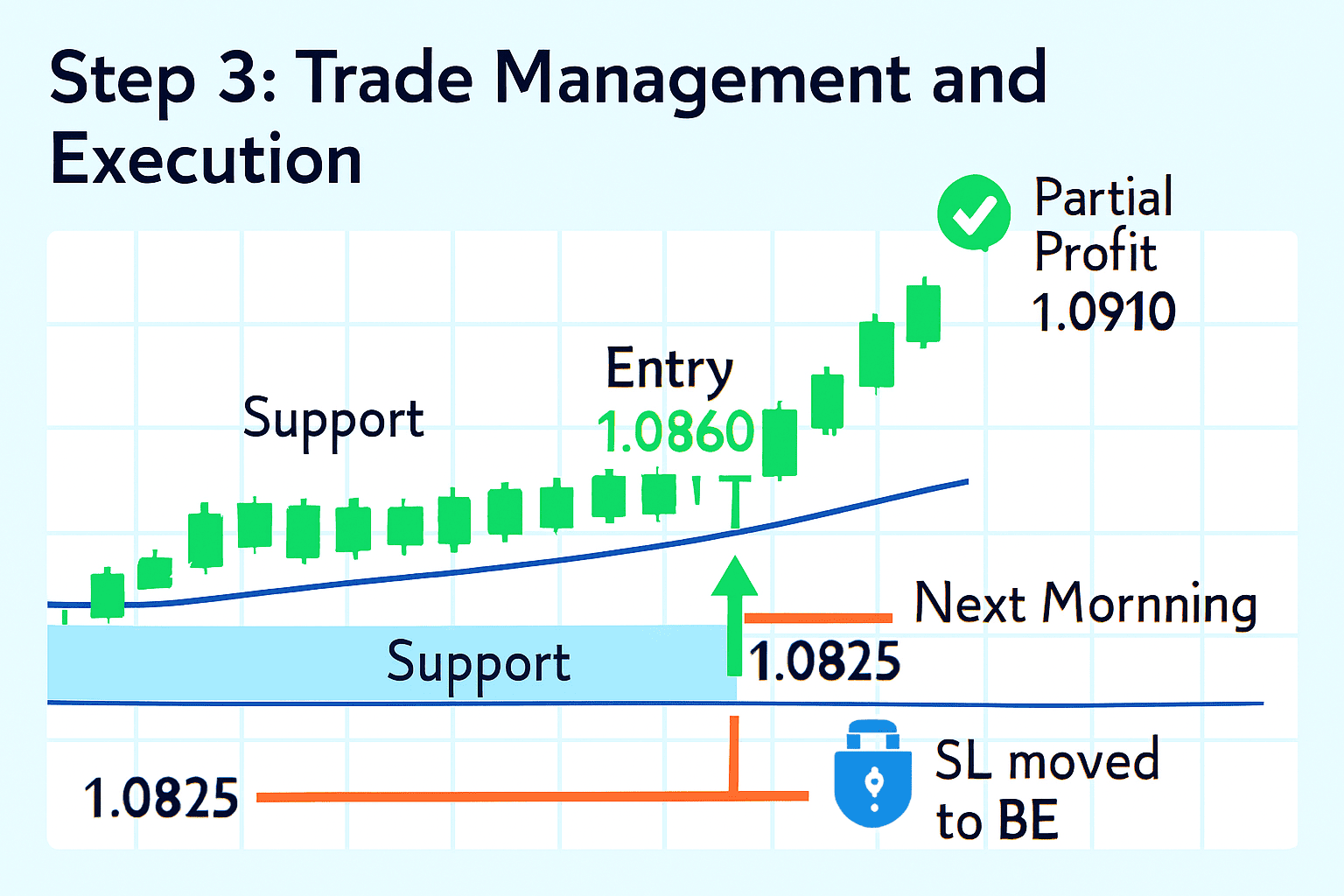
Traders who entered at or near 1.0860 were quickly rewarded with bullish price action. The pair moved up gradually during the U.S. session and continued to climb overnight.
Key developments:
- Price respected the 1.0850 zone as new support
- No news volatility trade stayed technical
- By the next morning (Wednesday), price had reached 1.0910
At this point, many traders secured partial profits or trailed their stop-loss into breakeven territory to protect gains.
Step 4: Take-Profit Hit
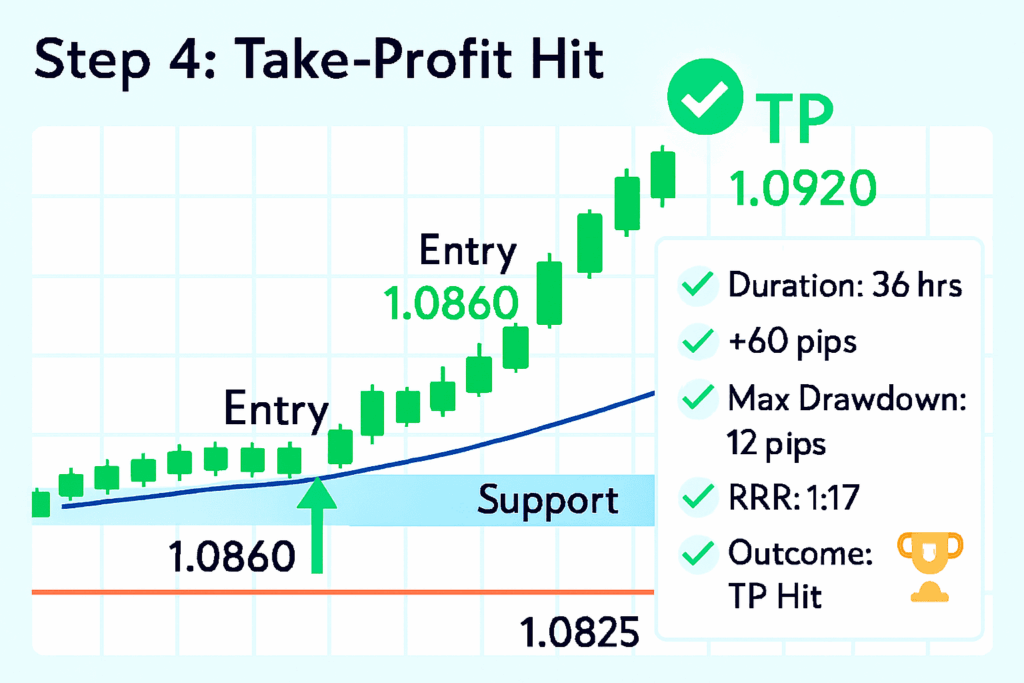
By Wednesday evening, EUR/USD touched the 1.0920 target level. The full signal played out exactly as planned clean entry, no drawdown beyond 10 pips, and smooth movement to the target.
Final Stats:
- ✅ Trade Duration: ~36 hours
- ✅ Pips Gained: 60
- ✅ Maximum Drawdown: 12 pips
- ✅ Win Outcome: Full TP hit
- ✅ RRR Achieved: 1:1.7
- ✅ Execution Difficulty: Low (clean entry zone)
Why This Signal Worked
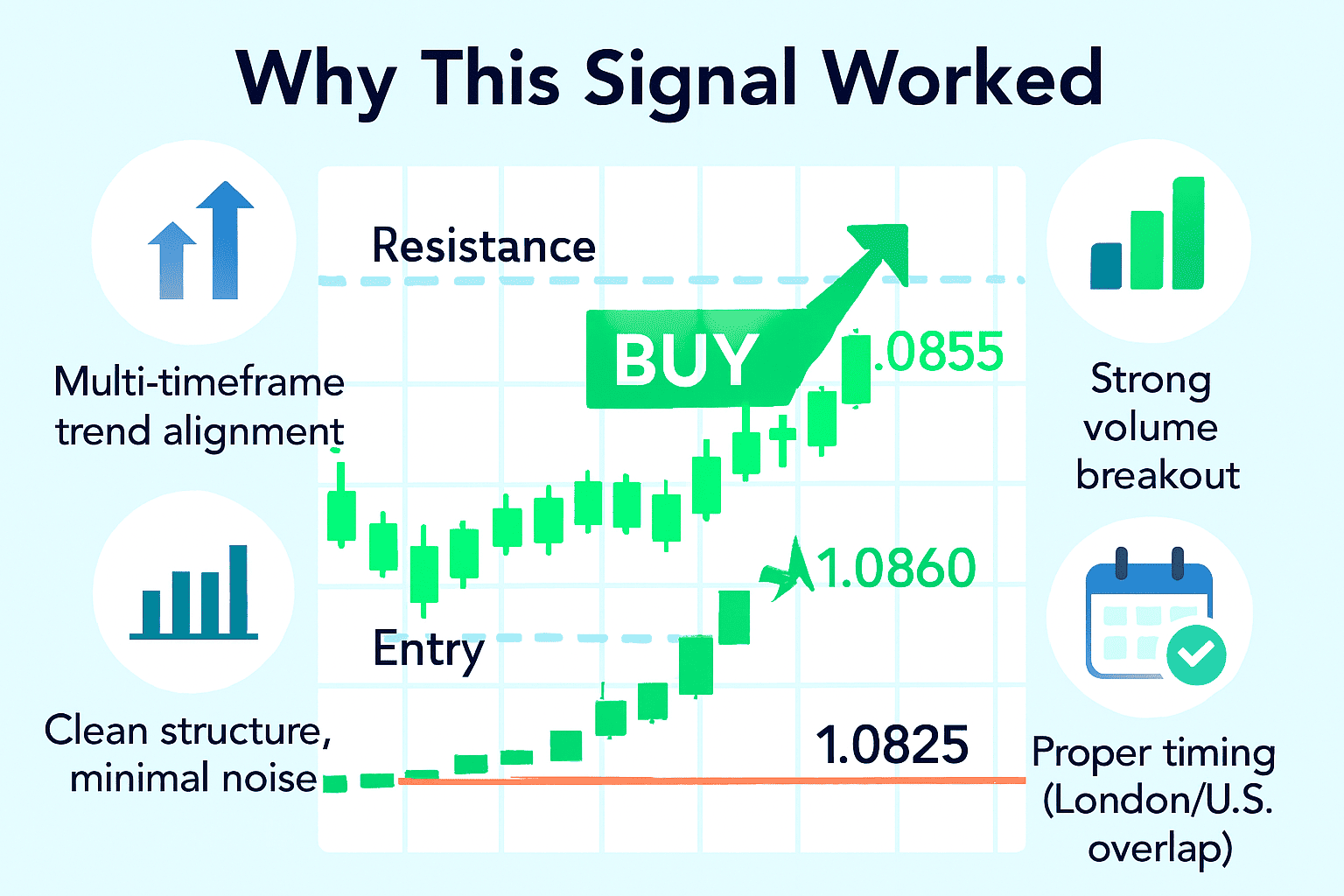
Several factors made this trade a high-probability setup:
- Multi-timeframe trend alignment
- Strong volume breakout above resistance
- No conflicting fundamentals
- Clean technical structure with minimal noise
- Proper signal timing (London-U.S. overlap = peak liquidity)
These are the setups SignalsGrid thrives on where strategy and structure line up perfectly.
Lessons for Traders

This case study reinforces a few key trading principles:
- Patience before the breakout pays off
- Volume confirmation is crucial for clean entries
- Predefined exit points reduce emotional decision-making
- Signal confidence levels matter when adjusting your trade size or strategy
Final Thoughts

The EUR/USD breakout trade wasn’t flashy but it was precise, disciplined, and profitable. That’s the kind of trade SignalsGrid aims to deliver consistently. By studying real examples like this, you not only build trust in the system you become a better trader in the process.
Stay tuned for more case studies in this series. And if you missed this trade? Don’t worry another setup is always around the corner.