
Introduction
In forex trading, every entry signal is only as good as its risk-reward profile. That’s why professional signal algorithms don’t just look for high-probability setups they rigorously filter trades using risk-reward criteria to ensure that the potential gain justifies the potential loss. This approach separates amateur signals from elite, institution-level strategies. In this article, we’ll break down how these filters work, why they matter, and how they’re implemented in smart signal systems like the one used by SignalsGrid.
What Is Risk-Reward Ratio (RRR)?
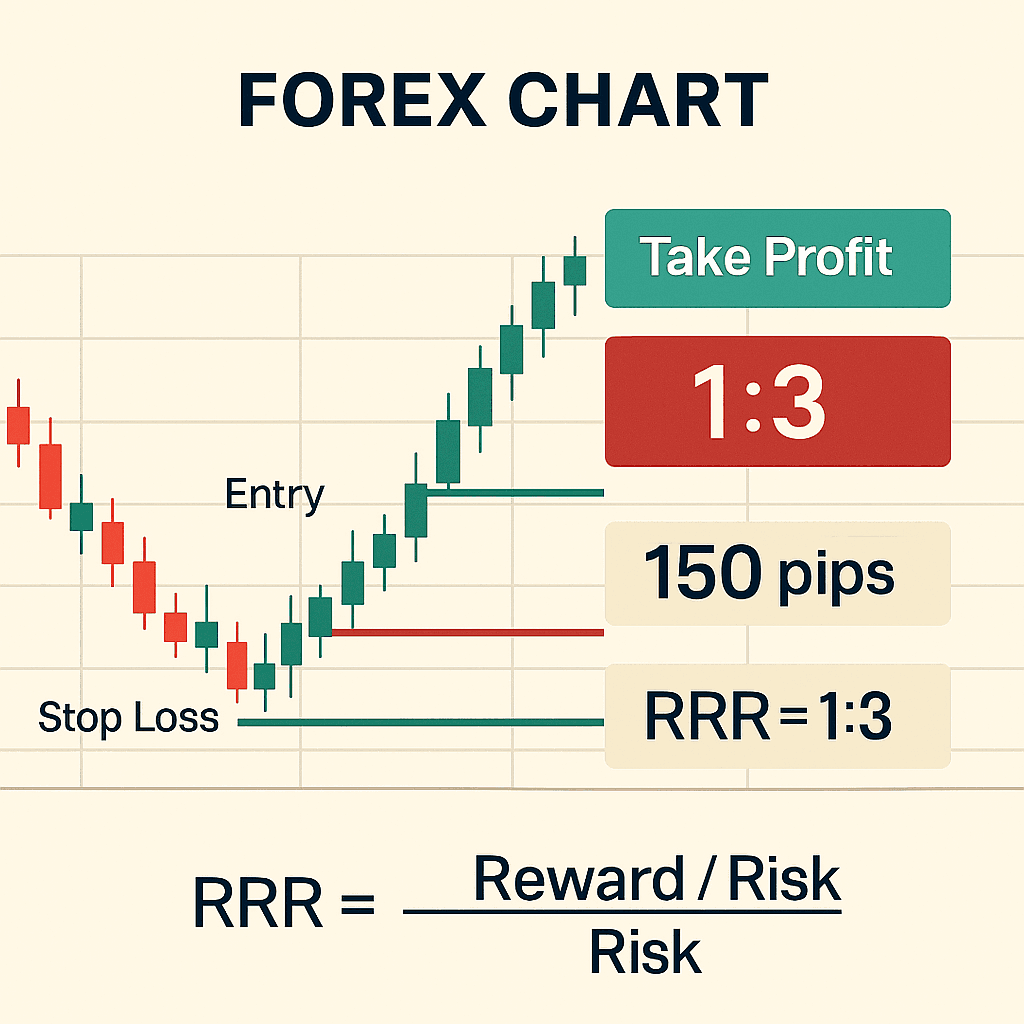
The Risk-Reward Ratio (RRR) measures how much a trader stands to gain versus how much they are willing to risk.
- Formula:
RRR = Potential Reward / Potential Risk
Example:
If you risk 50 pips to make 150 pips, your risk-reward ratio is 1:3.
Professional traders often aim for minimum RRRs of 1:2 or higher, depending on the strategy and market conditions.
Why Risk-Reward Filters Are Crucial in Signal Algorithms
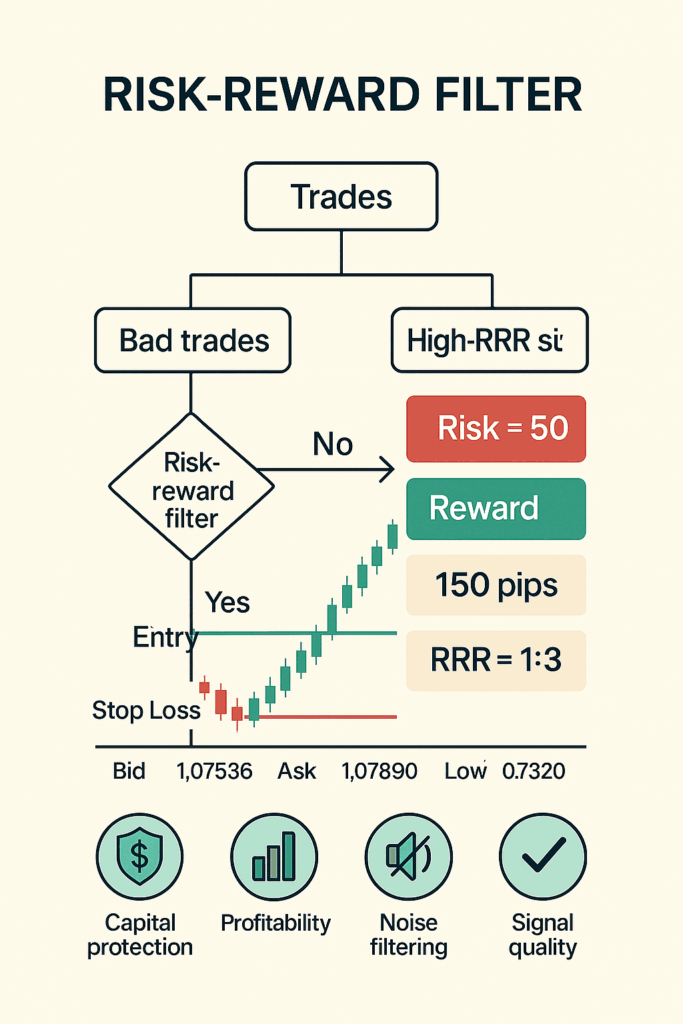
Even the most accurate entry signals can lead to losses if trades have poor risk-to-reward structures. Here’s why RRR filters are vital:
- Protects Capital: Avoids setups where potential loss outweighs potential gain.
- Boosts Long-Term Profitability: Even with a 50% win rate, a 1:2 ratio can generate consistent returns.
- Filters Out Noise: Eliminates low-quality trades with little upside potential.
- Improves Signal Quality: Ensures only high-conviction trades get through.
Related: Mastering the 3% Rule in Forex Trading
How Risk-Reward Filters Work in Signal Algorithms
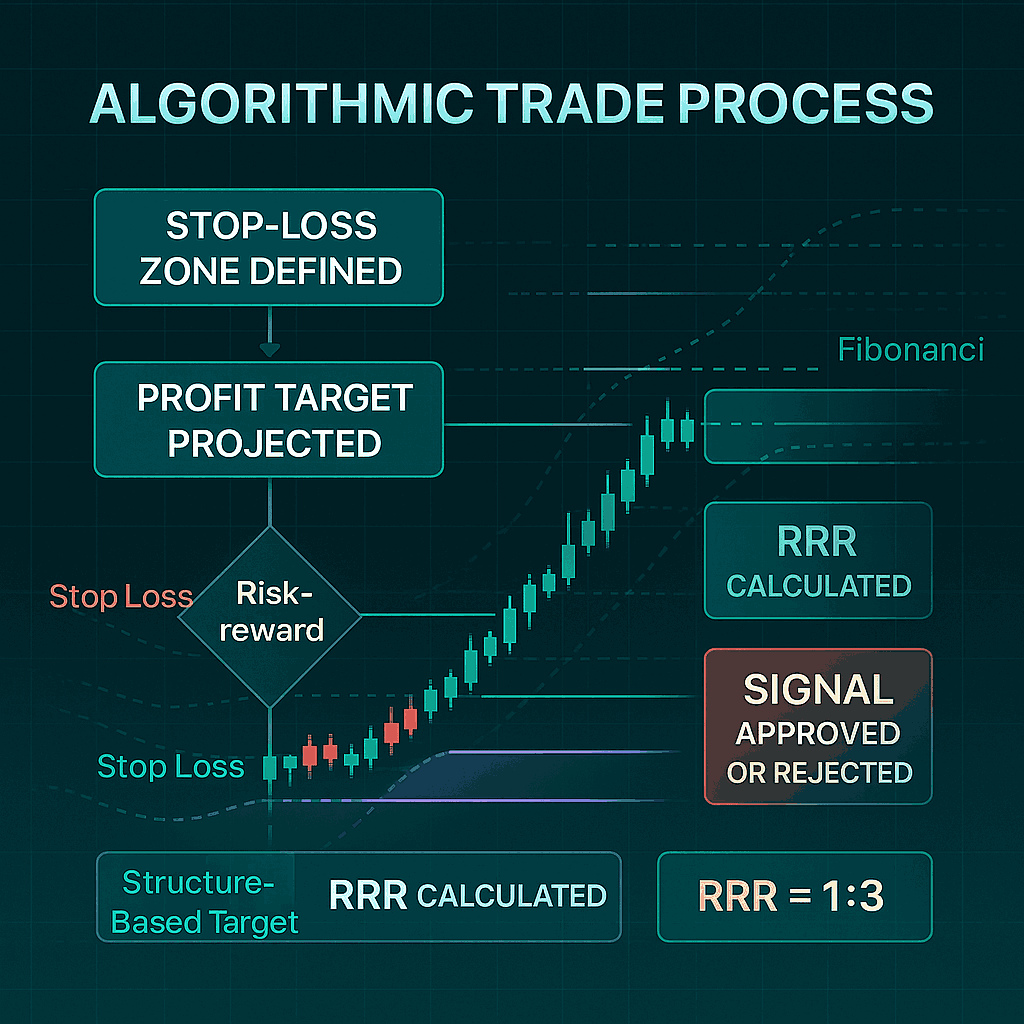
Let’s explore how professional-grade algorithms like those at SignalsGrid apply RRR filters:
1. Defining the Stop-Loss Zone
Before projecting any profit, the algorithm calculates where the trade would be invalidated:
- Recent swing high/low
- ATR-based volatility bands
- Key support/resistance levels
This determines the risk side of the ratio.
2. Projecting the Take-Profit Target
Next, the system identifies realistic profit targets using:
- Measured moves from chart patterns
- Fibonacci extensions
- Prior market structure
- Average trend extension distances (based on historical data)
This sets the reward side.
3. Calculating the Risk-Reward Ratio
With risk and reward both defined, the algorithm computes the ratio:
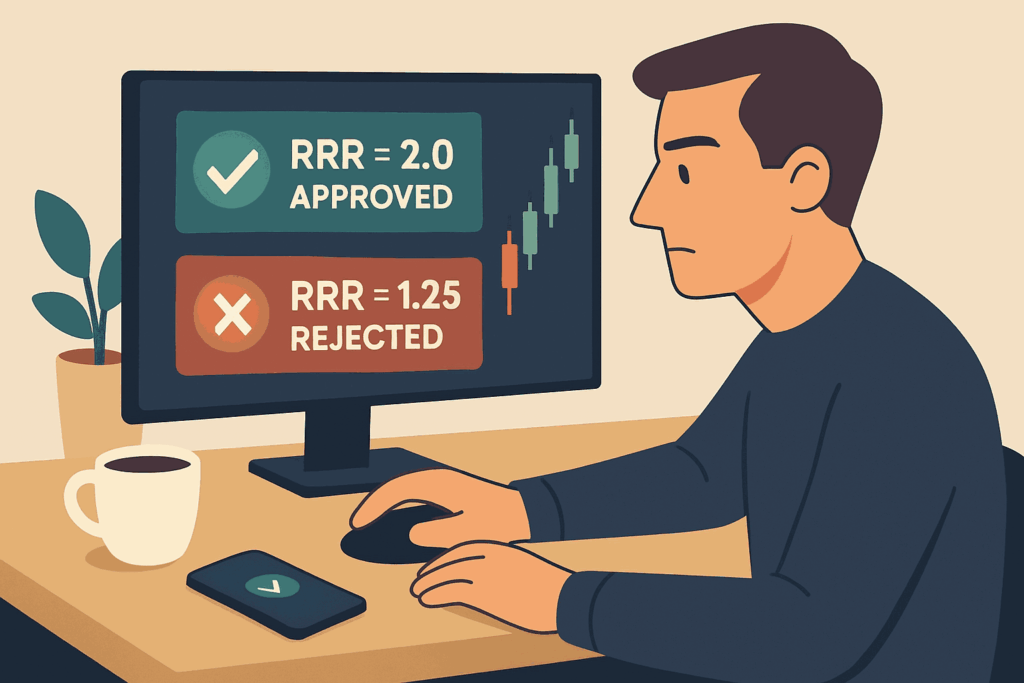
- If the ratio is below a pre-set threshold (e.g., 1:1.5 or 1:2), the trade is rejected even if the entry conditions are perfect.
- If it meets or exceeds the ratio, the trade passes the filter.
4. Dynamic Adjustments Based on Volatility
During high-volatility periods, risk can spike unpredictably. Sophisticated algorithms:
- Widen stops based on ATR changes
- Adjust take-profits accordingly to maintain the RRR threshold
- May even delay signals to wait for more favorable structure
Related: How AI Is Revolutionizing Forex Trading
Types of RRR Filtering Approaches
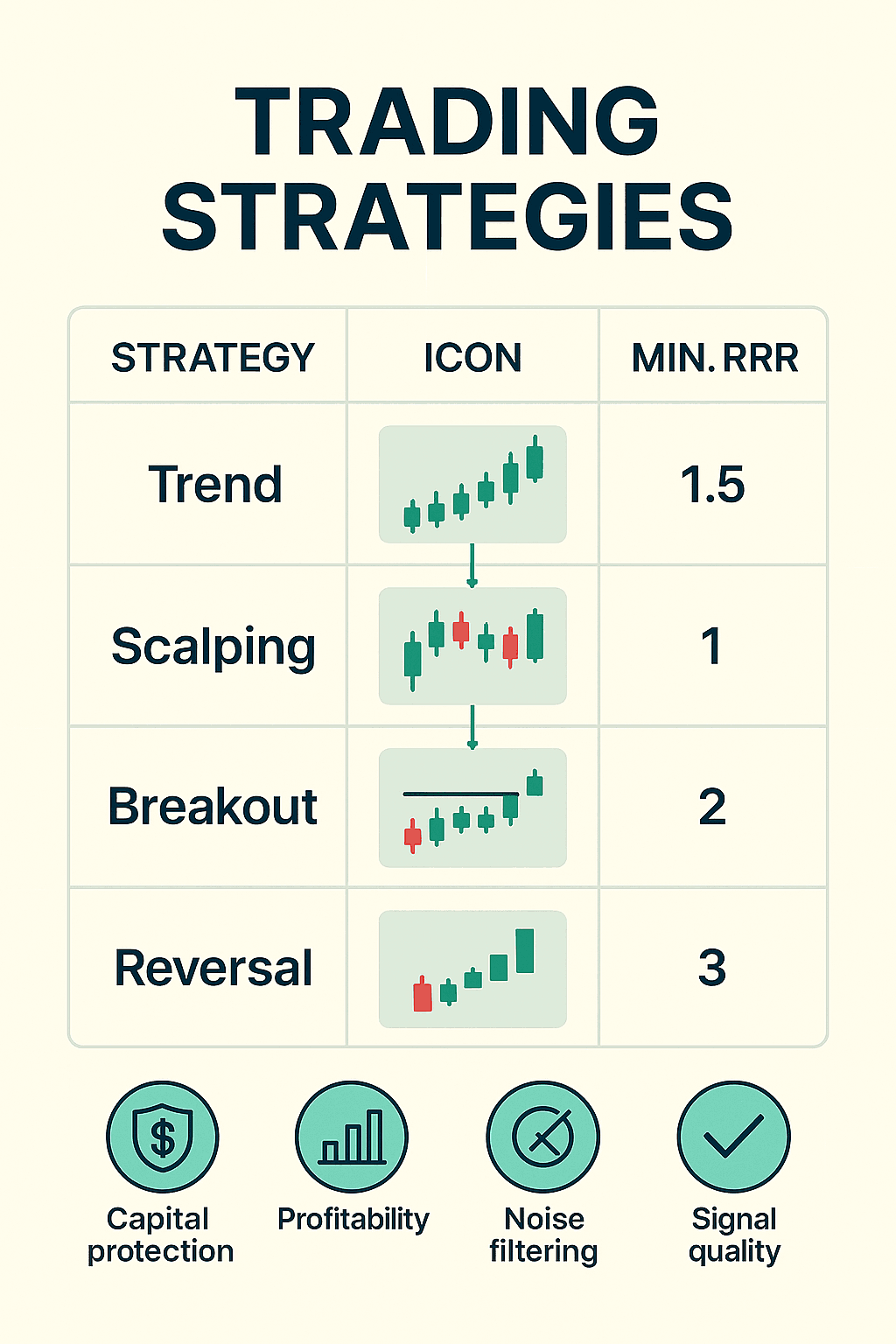
Different strategies apply risk-reward filters in slightly different ways. Here are a few common models:
| Strategy Type | Minimum RRR | Notes |
| Trend-Following | 1:2 to 1:4 | Larger trends = bigger reward potential |
| Scalping | 1:1.2 to 1:1.5 | Faster exits, tighter stops |
| Breakout | 1:2 minimum | Must clear stop distance convincingly |
| Reversal | 1:3+ | Lower probability, but higher reward |
Risk-Reward Filter Example (Trend Strategy)
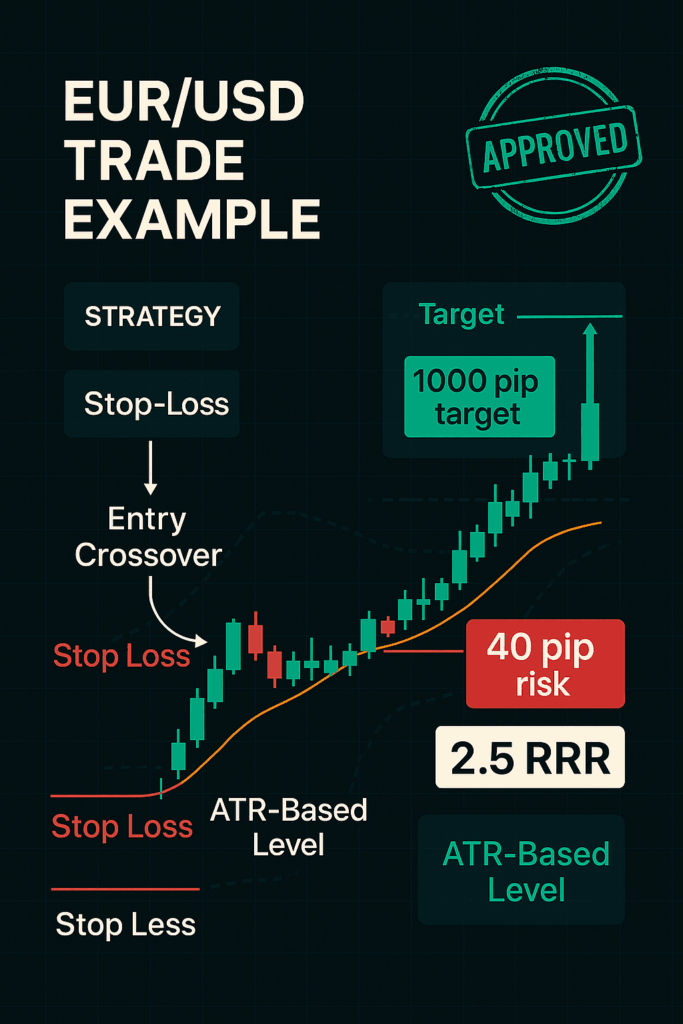
Setup:
- Buy signal on EUR/USD based on EMA crossover + ADX
- ATR suggests 40 pip stop
- Target projected at 100 pips based on previous trend leg
Risk-Reward:
100 / 40 = 2.5 → Trade approved by algorithm
Alternate Scenario:
If target was only 50 pips, RRR = 1.25 → Signal blocked or delayed
Integrating RRR with Other Filters
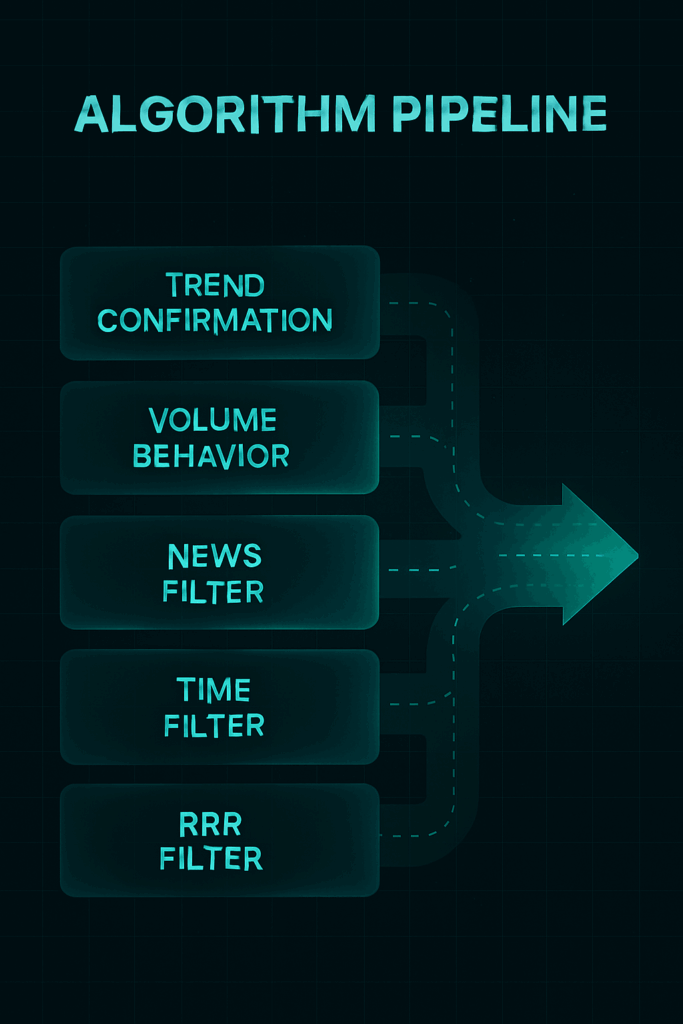
Professional algorithms never rely on risk-reward alone. At SignalsGrid, our system also evaluates:
- Trend confirmation (via moving averages, ADX, MACD)
- Volume behavior at entry point
- News filters (avoiding trades during major economic releases)
- Time filters (avoiding thin liquidity zones)
The RRR filter is the final gatekeeper, ensuring only trades with both technical quality and favorable reward profiles are sent out.
Why Traders Love RRR-Based Signal Systems
- Confidence: Traders know their potential gain always outweighs the risk.
- Discipline Reinforcement: Helps users avoid emotional trades based on FOMO or revenge trading.
- Better Money Management: Easier to position size properly when the RRR is consistent.
- Less Overtrading: Fewer but higher-quality signals mean less noise, more focus.
Final Thoughts
Professional signal algorithms aren’t just about finding good entries they’re about finding smart entries. By applying robust risk-reward filters, systems like SignalsGrid provide traders with high-quality opportunities that are engineered for consistency, discipline, and long-term profitability.
Whether you’re a beginner or an experienced trader, understanding and respecting the risk-reward structure behind your signals is one of the best ways to take your trading to the next level.
🔍 Want smarter forex signals powered by dynamic RRR filters and advanced AI logic?
Try the FxProfitBuilder Algorithm – trusted by traders worldwide for consistent, risk-managed signals.